

Topic: What is singing?
This site will give you info on how, why, and how to be better and products that can help and places to practice online and elsewhere. To have fun, be healthy and maybe even earn some income from your passion to sing.
Singing a Song: Its fun and healthy.
The following is a very boring explanation of what singing is.
“The act of creating melody using the voice is called singing, and a singing individual is termed as a singer or a vocalist. Singing is often distinguished from speech, and in many ways singing is regarded as a type of sustained speech. Hence, it is thought that anybody who has the ability to speak can also sing. (That’s what Professor Harold Hill told the quartet men in the musical “Music Man”.)
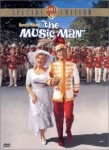 Click the picture buy a dvd copy from Amazon
(note: I make no money from Amazon-their choice not mine.)
The musical sounds produced through the act of singing are called songs. Songs may be A cappella (Italian for “in the manner of the church” or “in the manner of the chapel”), which means that it is sung without accompaniment, or they may be sung with accompaniment in the form of musicians and musical instruments. Singing may also be performed alone, or it may be performed with a group, with a choir being an example.
Singing may be done for simple enjoyment and this is done informally, such as singing while in the shower or singing in a karaoke bar. It may also be done very formally, as exemplified by professional singing for a performance, whether live in front of a watching crowd or in a recording studio. In this case, singing done on a professional scale, or at least on a high amateur level, entails the presence of some natural talent and a significant amount of regular, consistent and serious practice, which may be further enhanced with training and instruction. In general, professional singers develop and shape their careers around a particular musical genre. Furthermore, it is not uncommon for them to submit themselves to voice training under a voice coach all the way through their career. (Perfect Practice Makes Perfect.)
The quality of a singing voice depends largely on the physical make-up of an individual. In particular, body parts such as the lungs, larynx, cavities of the head and chest, and other structures like the tongue, palate, lips, teeth, and the muscles of the neck, chest and abdomen.
Singing voices may be classified according to voice type, and is further subdivided according to male and female voices. The classification of voices involves the consideration of vocal range, vocal tessitura, vocal transition points like lifts and breaks in the voice, vocal weight, vocal timbre, vocal registration, physical characteristics, speech level, and the like.
The science of classifying voices originally arose in the development of European classical music, generally for the purposes of opera, such as in assigning certain roles according to type of voice. The classification of voices is hardly used in more modern singing varieties. Nonetheless, at present there are various systems of voice classification employed in the genre of classical music. Examples include the choral music system, the German Fach system, and several others. However, none of these systems is conventionally acknowledged or put to use universally.
Be that as it may, most of the systems of voice classification recognize seven specific main voice types, and this is also divided according to sex. Females are generally classified into three different voice types, which are soprano, mezzo-soprano and contralto. Men, on the other hand, are generally categorized into four different voice types, and these are countertenor, tenor, baritone and bass. Furthermore, the classification of voice type in children of pre-pubescent years also entails the consideration of treble. In addition to this, further sub-categories are applied within each of these specific main voice types, with consideration of particular vocal characteristics such as vocal weight and coloratura.”
I’m sure glad that is out of the way.
Now to my experiences SingingASong.
When I was a boy I had a fine soprano voice that made people ooh and awe. But when in a youth choir at the Pioneer Tabernacle in St. George, Utah circa 1962 my singing abilities were called into question by some boys in the choir. The director silenced them by saying that she had listened to hear who was off and learned that “Jay was right on. He was just 2 octaves below everyone else.” I had become a bass forever more.
Tenors get respect and even Baritones, whereas the bass singer isn’t so popular, but hey, there are more of us.
What pitch do you sing at?
Some men try to sing too high and sound bad. Some though might be able to go higher and sound better, Michael Bolton as an example.
Now lets get to the fun stuff.
Instruction anyone? I’ve listened to some men and women speak very well and when they start to sing, oh my how bad they sound. Why? I think its because they are trying to sing in a range or style that doesn’t suit their voice.
Want some cool book instruction?
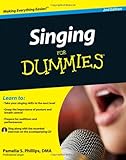
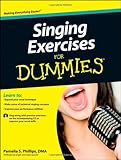
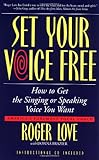 Set Your Voice Free: How To Get The Singing Or Speaking Voice You Want
Roger Love, Donna Frazier (Paperback – Aug 15, 2003)
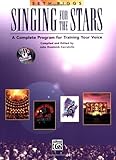 Singing for the Stars: A Complete Program for Training Your Voice (Book & 2 CD’s)
Seth Riggs (Paperback – Feb 8, 2008)
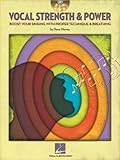 Vocal Strength and Power: Boost Your Singing with Proper Technique and Breathing
Dena Murray (Paperback – Nov 1, 2009)
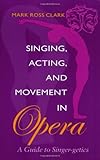 Singing, Acting, and Movement in Opera: A Guide to Singer-getics
Mark Ross Clark (Paperback – Sep 1, 2002)
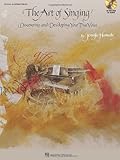 The Art of Singing – Discovering and Developing Your True Voice (Vocal Instruction)
Jennifer Hamady (Paperback – Apr 1, 2009)
 The Voice Book: Caring For, Protecting, and Improving Your Voice
Kate DeVore, Starr Cookman (Paperback – Jul 1, 2009)
 Great Singers on Great Singing: A Famous Opera Star Interviews 40 Famous Opera Singers on the Technique of Singing
Jerome Hines (Paperback – Jul 1, 2004)
Then there is breathing and singing.
Here’s a You Tube video explaining about breathing.
Breath right to speak and sing right
For some fun try these online karaoke site:
Hear me sing or sign up for free.
Go and start “singingasong” and having fun for free to start. Folks on Karaoke sites are friendly and kind for the most part and encourage people to try even though some don’t sound quite as good as others do. And I’ve noticed in my 8 years of online Karaoke participation, that many of those not so good folks who love to sing, sound better the more they do it. So don’t shoot anyone down. Be kind and encourage others like you’d like to be encouraged yourself and just have fun.
I use both Sing Snap and the Karaoke Channel.
Sometimes I get tired of the selection of songs, so I look up versions to songs in different languages just for some fun. I’ve recorded songs in my second language (German) and in about eight other languages. Have even participated in a Karaoke competition in Las Vegas, Nevada. Lots of fun.
At the top of the page, I said singing can be fun and healthy. How can it be healthy? Well, I’ll tell you an example of a lady who started karaoke singing at age 63 when her husband died and she was not in good shape either as she was on oxygen and general ill health. She started singing and soon threw the oxygen tank away, by better breathing, she got the oxygen her body needed without a machine and became healthy and is now happily re-married in her seventies and doing well. Who is she? Learn about her and hear her singing http://www.youtube.com/user/ThePerpetualwoman then go to her uploads for her recordings. You’ll like her variety show too.
Most of us breathe shallow, not really getting the oxygen we need. Singing gets more air into us.
So let’s get at it and start having fun and getting and staying healthy.
And keep singing.
Send your comments to: beachamj82@yahoo.com
Or to hear my singing in 13 plus languages go to:
http://www.singsnap.com/karaoke/member/jaybeacham
Sign up as an affiliate with this link: https://payhip.com/auth/register/af57730d2da4987


What’s up to all, how is the whole thing, I think every one is getting more from this web site, and your views are pleasant (for) new visitors.
I’m truly enjoying the design and layout of your site. It’s a very
easy on the eyes which makes it much more enjoyable for me
to come here and visit more often. Did you hire out a developer
to create your theme? Superb work!
My comments are always real
Makes me wanna sing.
Ruth F. Ohio
Hello! … interesting site! I’m really like it! Very, very good!
Assumed I would comment and also say neat subject, did you code them on your own? It looks great!
HEY JAY! THIS IS GREAT, AND VERY INFORMATIVE! I WILL COME BY AGAIN, SOON, FOR MORE INSIGHT! I NEED AS MUCH HELP AS I CAN GET….(AS YOU WELL KNOW)……THANKS FOR SHARING THIS LINK WITH ME! YOU ARE MOST APPRECIATED AND LOVED! SUCH A TALENT!!!!! THANK YOU!!!!!!!!!!!!!!!!
HI JAY WHAT A GREAT THING TO DO FOR US. I FIT RIGHT INTO ALL OF THE ABOVE. IF THERE WAS A “YOU STINK YOU ARE TERRIBLE ” CONTEST I WOULD COME IN THIRD PLACE .
SO THERE IS DEFINATELY AN ISSUE WITH MY VOICE.
I SING BECAUSE ITS HEALTHY AND MY LUNGS WORK HARD TO KEEP MY ASTHMA UNDER CONTROL. SINGING IS ALSO FUN AND SOOTHING. NO STRESS AT ALL. SINGING IS THE BEST MEDICINE. .
I SING FOR ME ONLY CAUSE ITS A REAL PLEASURE.
YOU HAD REALLY GREAT TIPS IN HERE JAY WILL CERTAINLY PUT THEM TO GOOD USE.
THANKS FOR THINKING OF ME
HAVE A GREAT DAY
HUGS
SARA
Lovely! This was a really wonderful blog post. Thank you for offering this advice.
Jay…. Awesome site…. real informative for people who take their singing seriously!
Lots of tips and info!
Thanks for sharing.
Your friend in song..
Mimi
Lovely! This was a really splendid submit. Thank you for giving this material.
Lovely! This was a really marvelous submit. Thank you for presenting this info.
Very good tips, you just gained an innovative new reader. I’m curious should you have any follow pros to this post?
i like this site a lot!
i love this website so much!
Way cool! Some extremely valid points! I appreciate you writing
this article and also the rest of the website is extremely good.